Shortly after migrating to Canada, during a meeting with my high school’s career counsellor, I shared my interest in pursuing a pre-university college (Cégep) diploma in the Liberal Arts, a small-cohort program based on rigorous study of the Western literary, artistic, and philosophical canon. Without looking at my grade bulletin or asking any further questions, they said I should instead consider a trade or a less demanding path. In retrospect, whether this suggestion was rooted in their perception of my academic abilities through my rudimentary French, an unconscious association between ethnicity, migration, and the kinds of jobs or careers that befit such backgrounds, or a preconceived notion of who the audience for the Liberal Arts might be, it marked an early encounter with gatekeeping practices in higher education who define, along specific lines, who deserves to learn what, where, when, and how. My experiences as a member of historically marginalized and underrepresented communities in academia have shaped the practices I adopt in my teaching, mentoring, and research to minimize the feelings of isolation that result from underrepresentation and promote the integration of students from all backgrounds into university life and our profession.
Aware of the important role that instructors play in the academic, professional, and personal paths that students undertake once they enter our institutions, I seek to enact principles of inclusion, diversity, and equity to ensure that students know that i) they belong and 2) they can succeed, thus contributing to a more accessible and sustainable academia. Having taught over fifteen undergraduate courses, I have realized that putting my positionality forward—as an ESL speaker, migrant, and member of the LGBTQ2S+ community—tells students from diverse backgrounds in no uncertain terms: “You belong here; there is room for all.” Recently, discussing graduate school applications with a former student over lunch, they mentioned that I had been their first openly gay Latin American college instructor and that to see themselves represented in this position had been both eye-opening and inspiring. Inspired by my administrative work with the advising team at the School of General Studies—Columbia’s school for nontraditional baccalaureate students—I requested to teach a GS-specific section of Literature Humanities. This experience gave me a deeper understanding of non-traditional students’ diverse backgrounds, needs, and challenges. It led me to develop high-impact strategies to teach a curriculum designed with traditional students in mind to an equally capable yet radically different student population. These initiatives have been the result of seeking out opportunities to develop my pedagogical practice through workshops and roundtables attended in the context of the Teaching Development Program offered by Columbia’s Centre for Teaching and Learning. My dedication to my students was recognized with the 2024 Presidential Award for Outstanding Teaching, Columbia’s most prestigious recognition of exceptional and innovative teaching, a testament to my passion and my commitment to creating accessible and inclusive classrooms where students can thrive.
Mentorship is an essential component of my pedagogical practice. I have sought opportunities to empower and set up non-traditional students and those from historically underrepresented backgrounds for success. One of my notable achievements was designing and teaching the 2021 Humanities Seminar as part of the GSAS–Leadership Alliance Summer Research Program. In this role, I closely mentored four students of colour from non-Ivy League schools, guiding them through all aspects of academia and engaging in numerous formal and informal conversations about their professional and personal goals. In the seminar, I introduced them to key concepts in the humanities and decolonial approaches to knowledge creation. I also supported them in researching and writing an individual project in disciplines including medical humanities, Filipino and Tusán (Chinese-Peruvian) literature, and Japanese art history by designing scaffolded milestones and opportunities for peer review and formative feedback. I have also engaged in horizontal mentorship, organizing workshops and learning communities for fellow instructors on anti-oppressive and anti-racist pedagogies. These experiences have helped me understand that mentorship—both formal and informal—remains the most productive way of creating equitable and inclusive spaces in academia. As such, I strive to improve the ways in which we welcome students into the profession and, once there, to set them up for success.
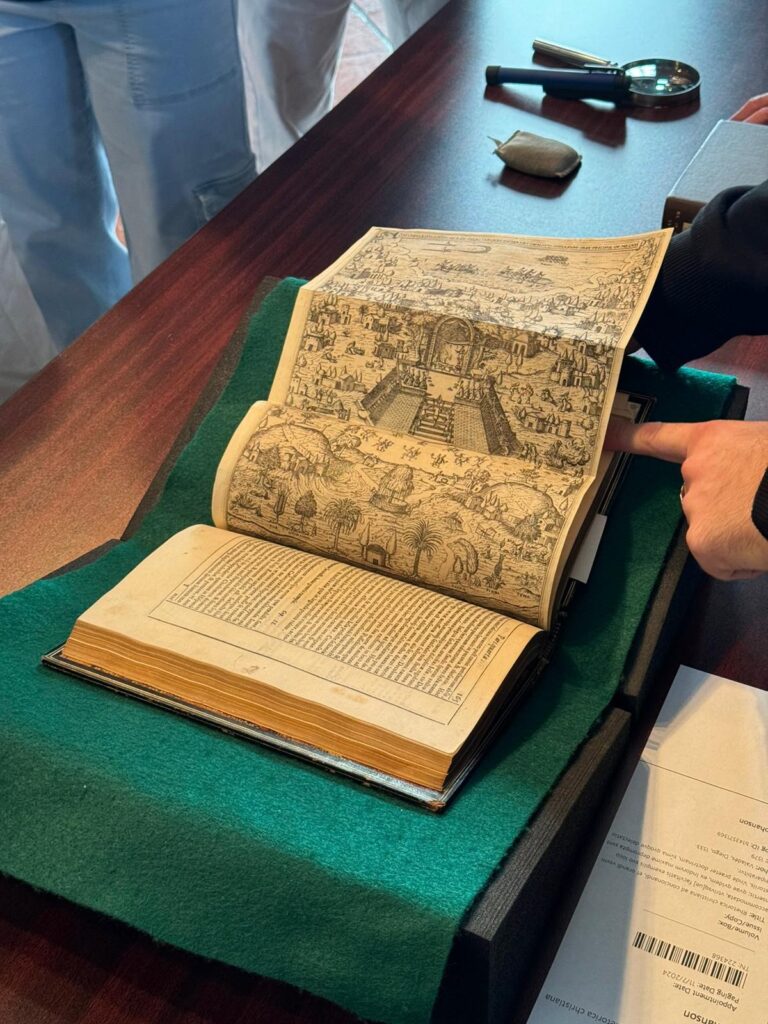
Division of Manuscripts and Rare Books, New York Public Library.
Because I see teaching and research as mutually constitutive, my commitment to inclusion, diversity, equity, and accessibility in the classroom informs and is informed by my research. Aware of my positionality as a Colombian-born uninvited settler in Kanien’kehá:ka and Lenape lands, I have intentionally sought coursework on Postcolonial, Decolonial, and Indigenous theories and methods, which have provided ways of thinking, reading, and writing that I bring to my published work, dissertation research, and teaching. In doing so, I strive to centre and echo Indigenous and anticolonial voices, thus aligning my work with calls to re-evaluate our citational footprint, address issues of colonization and racism head-on, and read against the colonial grain. In my dissertation, I revisit the history of education in the early years of Spanish colonial rule in New Spain/Mexico, paying close attention to the ways in which alphabetization and image-making coexist with deterritorialization and settlement, and I draw from the work of Linda Tuhiwai Smith, Patrick Wolfe, Tiffany L. King, and recent Indigenous and settler critiques of the Indian Residential School System in Canada. This anachronistic and hemispheric approach has the potential to build connections and forms of co-resistance across settler borders and revitalize our knowledge of the histories of education and colonialism across Turtle Island and Abiayala (the Americas). My most recent publication in Latin American and Latinx Visual Cultures examined two case studies that connected forms of Indigenous co-resistance against feminicidio in Guatemala and the epidemic of Missing and Murdered Indigenous Women, Girls, and Two-Spirit individuals in Canada. Another dimension of how I enact IDEA principles in my research is by bringing together my own identity as a member of the LGBTQ2S community with the fields of religious studies and art history. In 2017, I published an article that examined the work of Cuban-American artist Félix González Torres through the lens of counter-monumentality and queer martyrdom in the inaugural issue of Conexión Queer: Revista Latinoamericana y Caribeña de Teologías Queer, an open-access peer-reviewed journal that connects researchers across the Americas. This familiarity with more contemporary issues that stand outside my area of expertise also contributes to my teaching and helps me creates opportunities for students to engage questions of settlement, coloniality, gender, and sexuality beyond the early modern period.
I begin my teaching philosophy statement with a question: “For whom is a Liberal arts education?” This is not a rhetorical exercise, but rather a preoccupation that has emerged from my own lived experiences in higher education. In recent years, I have deployed my positionality—as a queer migrant, a teacher, a mentor, a colleague, and a researcher—to support efforts that enhance inclusion, diversity, equity, and accessibility in academia, so that the answer to that question can one day be: for all of us.